RIEL seminar series
Loss of Earth's old, wise and large animals
| Presenter | Dr Keller Kopf | |
|---|---|---|
| Date/Time |
to
|
|
| Contact person | E: RIEL.outreach@cdu.edu.au | |
| Location |
Savanna Room, Yellow 1 level 2 room 48 at CDU Casuarina Campus And online via Zoom (see below for Zoom link) All times are ACST |
|
| Open to | Public | |
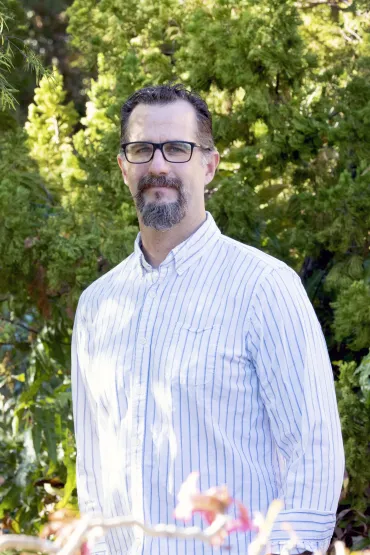
Dr Keller Kopf is an ecologist and senior lecturer at Charles Darwin University, and a member of the Freshwater, Estuarine and Marine Ecology Research Group at the Research Institute for the Environment and Livelihoods.
In the seminar ‘Loss of Earth's old, wise and large animals’, Keller will outline that humans have caused a decline in old age classes of wild animal populations whereby many of Earth’s oldest, often largest, and most experienced individuals have been eliminated from ecosystems.
The ecological and socioeconomic consequences of this loss are poorly known. Owing to the well-established negative aspects of biological aging, the ecological or conservation importance of old individual animals has been neglected. By contrast, emerging literature has shown that old individuals provide unique biological, ecological, cultural, and ecosystem service functions that have been—or are being—lost as these aged individuals are exploited.
The presentation will highlight the global consequences of the loss of old individual animals in the wild and emphasise the importance of longevity conservation as a solution.
Keller’s research combines field, laboratory and statistical modelling approaches to address applied and fundamental research questions, mostly related to the ecology and conservation of fish and the environments they inhabit. His research aims to guide management of river-floodplains, sustainable fisheries and marine ecosystems.
Related Events
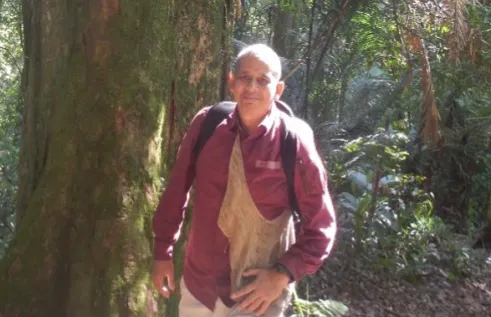
Last refugium of a critically endangered species: Three decades of conservation
The Banggai Crow (Corvus unicolor), is one of the world’s most threatened endemic species. The bird survives in an increasingly fragmented refugium within the Banggai Archipelago, Central Sulawesi.
Read more about Last refugium of a critically endangered species: Three decades of conservation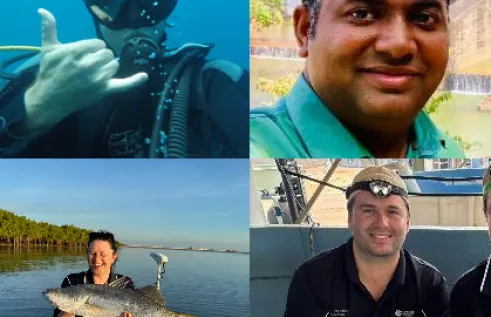
Marine science in the NT: From research and monitoring to stock assessment
In this seminar, the team will provide an overview of fisheries research in the Northern Territory, highlighting monitoring programs, data collection, and how these activities inform stock assessment and fisheries management
Read more about Marine science in the NT: From research and monitoring to stock assessment
Time for research
This workshop shows you how to guarantee you spend high quality time on your research outputs. It covers prioritising, goal setting and managing competing demands in a university context. If you want to increase your research output without compromising your work/life balance, then this workshop is for you.
Read more about Time for research


