RIEL seminar series
Boring beetles and super models: mapping the distribution of a new invader
| Presenter | Dr Andrew Coates | |
|---|---|---|
| Date/Time |
to
|
|
| Contact person | E: RIEL.outreach@cdu.edu.au | |
| Location |
Yellow 1 level 1 room 33 at CDU Casuarina Campus And online via Zoom (see below for Zoom link) All times are ACST |
|
| Open to | Public | |
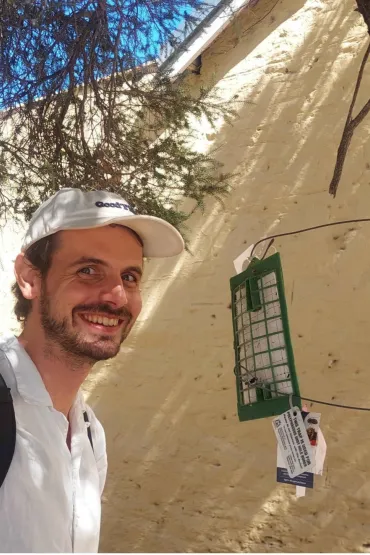
Dr Andrew Coates is a research associate in the Population Biology and Genomics group at Curtin University, Western Australia.
The polyphagous shot-hole borer (PSHB) is a tiny beetle with a mouthful of a name, but it’s been making headlines as a new invasive species in Australia. PSHB was first detected in Perth three years ago and has since devastated trees across the city. There are concerns about what its further spread could mean for urban, agricultural and natural environments.
In the seminar ‘Boring beetles and super models: mapping the distribution of a new invader’, Andrew will give an overview of this new invader, its fascinating biology, its legacy of colonisation and destruction, and the research efforts to combat its spread.
In particular, Andrew will discuss his current research, which draws upon his experience in pest population modelling. Distribution models are valuable tools for predicting how invasive species spread across a novel landscape. This knowledge can be used to inform decisions on how to deploy monitoring and control efforts most effectively.
Andrew’s research interests bring together parasitology, invasion dynamics, population modelling and evolutionary biology. Study systems include house geckos, salmon lice and fungus-farming beetles, which all bring up questions about how humans influence ecological processes.
He is also an adjunct research associate at Charles Darwin University.
Related Events
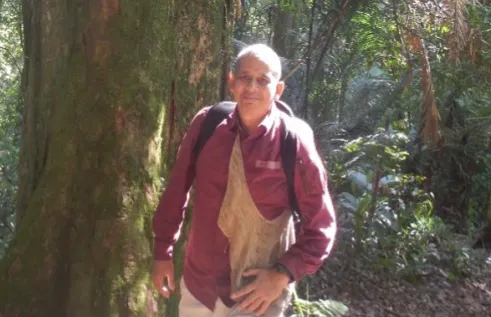
Last refugium of a critically endangered species: Three decades of conservation
The Banggai Crow (Corvus unicolor), is one of the world’s most threatened endemic species. The bird survives in an increasingly fragmented refugium within the Banggai Archipelago, Central Sulawesi.
Read more about Last refugium of a critically endangered species: Three decades of conservation
Time for research
This workshop shows you how to guarantee you spend high quality time on your research outputs. It covers prioritising, goal setting and managing competing demands in a university context. If you want to increase your research output without compromising your work/life balance, then this workshop is for you.
Read more about Time for research
What does it mean to be an academic today?
Hear from a panel of individuals from a range of backgrounds and career stages. Key topics to be covered include:
- The academic career in today’s context and the different types of academic roles
- The emergence of the impactful researcher
- From industry to academia and vice versa
- Being strategic: understanding external forces at play, including regulation and policy directions from government
- The importance of consistency and resilience


