RIEL News
Consideration of First Nations cultural values in mining rehabilitation in the NT
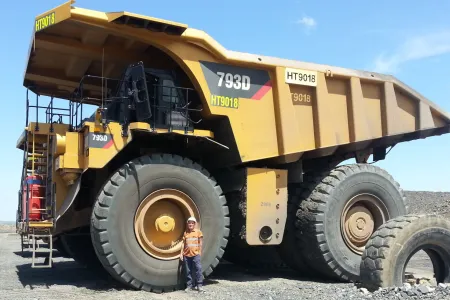
Most mine sites in the NT either are on, or impact, the lands of Traditional Owners (TOs). TOs have a fundamental spiritual connection with the land, which includes responsibility for the care of the land and relates to physical, health, cultural, and environmental dimensions. RIEL has had a sustained focus on assessing the ability of mining companies to consider First Nations cultural impacts when carrying out mining rehabilitation.
From 2019 to 2023, Master by Research student Will Kemp investigated the consideration of First Nations cultural values in mine planning, under the supervision of RIEL’s Dr Sean Bellairs and Edith Cowan University’s (ECU) Prof Janine Joyce. One aspect of this research used thematic analysis to investigate how, when, and in what context First Nations cultural values are considered by environmental professionals when planning and undertaking mine rehabilitation activities, which involved interviews with environment professionals. A second component of the research used content analysis software to analyse NT Environment Protection Authority (EPA) reports on proposals for mining projects that were submitted between 1991 and 2020.
The eight professionals who were interviewed all had experience managing the rehabilitation of mine sites on First Nations land in the NT and had a combined total of more than 150 years of experience in mine site environmental management. After analysing the interviews, six themes were identified: cultural and other values, rehabilitation planning, impediments or barriers to achieving restoration of cultural values, solutions, consideration of principles, and TOs. A key principle that emerged was that ecological and cultural traditional knowledge are interwoven but both need to be communicated effectively and respectfully.
The professionals felt that often there could be the ability to plan for and achieve TO cultural values, but that there was rarely a detailed agreement prior to mine approval about outcomes to achieve cultural values. After a project had been approved TOs often had to compromise rather than achieve the ecological and cultural outcomes that they would like.
Analysis of EPA reports found that when the reports were grouped by decade, the attention given to First Nations peoples in mine proposals fell by more than half over the 30 years that were analysed, from 18% relevance to 7%.
General outcomes were that the regulation of mining approval needs to achieve clearer agreed goals that companies commit to, with respect to First Nations cultural values, as part of the initial approval process. Costs to TOs in loss of traditional resources, loss of cultural values that are not economic to restore, and of ongoing additional land management need to be considered. Communication needs to be effective, which requires time and cultural appropriateness. TOs need to be involved at all stages — from planning, to defining restoration criteria, development of solutions, implementation of rehabilitation, and approval of rehabilitation success.
In 2024, project participants Mr Kemp, Dr Bellairs, Prof Joyce and ECU’s Jane Henderson were invited to present at Mines and Environment’s Mine Closure Conference in Perth. The team also made a submission to the Western Australian Mine Closure Plan Guidelines review, and has published the research.
Reference: Kemp, W., Bellairs, S.M., Joyce, J. and Henderson, J., 2023. Consideration of First Nations’ cultural values in mine site rehabilitation by environmental professionals. Environmental Challenges, 13, p.100757. https://doi.org/10.1016/j.envc.2023.100757
This story was originally published in RIEL Annual Report 2024
Related Articles
Project examines fisheries and aquaculture work through gender lens
Nilanjana Biswas’s PhD project explores the under-researched role of women in the NT’s commercial seafood sector. Using a gender lens and mixed methods, it examines historical contributions, structural barriers, and policy impacts, making it one of Australia’s first studies in this field.
Read more about Project examines fisheries and aquaculture work through gender lens
Producing practical recommendations for bilby conservation
Over a multi-year journey, Hayley Geyle completed a valuable PhD project focused on the ecology of the greater bilby. The work centred on improving understanding of the ecology, distribution, and abundance of the bilby in arid and semi-arid Australia, particularly in the NT which is one of the species’ last remaining strongholds.
Read more about Producing practical recommendations for bilby conservation
Preserving genetic diversity of endangered rabbit-rats
Bryn Pickering focused closely on brush-tailed rabbit-rats (Conilurus penicillatus) during his honours year. In particular, he aimed to evaluate the viability of a population of rabbit-rats that were translocated from mainland Cobourg Peninsula onto Greenhill Island, within Garig Gunak Barlu National Park in the NT.
Read more about Preserving genetic diversity of endangered rabbit-rats


