RIEL seminar series
An eDNA/Omics Strategy for the Ranger Uranium Mine
| Presenter | Dr Andrew Harford | |
|---|---|---|
| Date/Time |
to
|
|
| Contact person |
Research Institute for the Environment and Livelihoods
|
|
| Location | Yellow 1, Level 2, Room 48 at CDU Casuarina Campus, and online via Zoom. All times are ACST. | |
| Open to | Public | |
Dr Andrew Harford is Team Leader of Water and Sediment Quality at the Environmental Research Institute of the Supervising Scientist (ERISS).
The Office of the Supervising Scientist (OSS) protects the environment and people from uranium mining impacts in the Alligator Rivers Region. As rehabilitation of the Ranger Uranium Mine advances, OSS is developing a long-term monitoring program to ensure stakeholders’ expectations are met.
The OSS omics strategy aims to integrate tools like iDNA and eDNA, genomics, and metabolomics into existing chemical, biological, and radiological monitoring. These approaches improve efficiency, scalability, and safety. The strategy supports ecosystem assessments—from aquatic fauna to soil microbes—and emphasises standardisation, robust bioinformatics, and collaboration with researchers, Traditional Owners, and regulators to guide evidence-based decisions and protect Kakadu National Park’s unique ecosystems.
Andrew specialises in water and sediment quality assessments, with expertise in ecotoxicology, eDNA, and long-term ecosystem monitoring. He leads strategic research at the OSS, supporting evidence-based rehabilitation of the Ranger Uranium Mine and protection of Kakadu National Park through innovative, science-driven solutions and collaboration.
Related Events
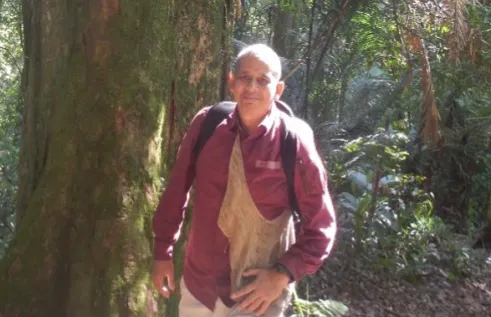
Last refugium of a critically endangered species: Three decades of conservation
The Banggai Crow (Corvus unicolor), is one of the world’s most threatened endemic species. The bird survives in an increasingly fragmented refugium within the Banggai Archipelago, Central Sulawesi.
Read more about Last refugium of a critically endangered species: Three decades of conservation
Time for research
This workshop shows you how to guarantee you spend high quality time on your research outputs. It covers prioritising, goal setting and managing competing demands in a university context. If you want to increase your research output without compromising your work/life balance, then this workshop is for you.
Read more about Time for research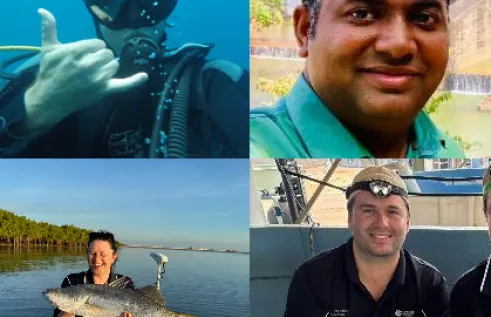
Marine science in the NT: From research and monitoring to stock assessment
In this seminar, the team will provide an overview of fisheries research in the Northern Territory, highlighting monitoring programs, data collection, and how these activities inform stock assessment and fisheries management
Read more about Marine science in the NT: From research and monitoring to stock assessment


