RIEL seminar series
HDR Reports
| Presenter | Billee McGinley and Natalie Robson | |
|---|---|---|
| Date/Time |
to
|
|
| Contact person | E: RIEL.outreach@cdu.edu.au | |
| Location | Casuarina campus Yellow 1, Level 1, Room 39 and online | |
| Open to | Public | |
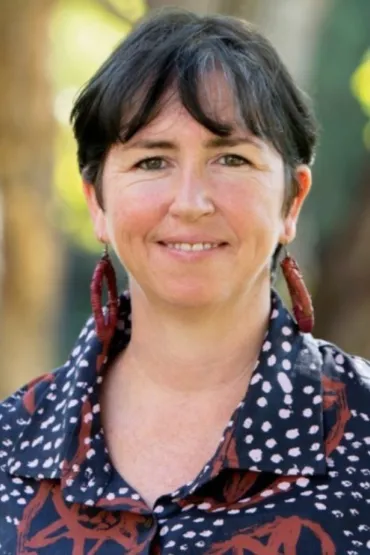
Spatial analysis for planning ecological sustainable development of utility-scale solar and wind energy in the Northern Territory, presented by Billee McGinley
Conservation of biodiversity, climate mitigation and renewable energy targets and goals converge in current policy plans in 2030. While a transition to renewable energy is a key solution to mitigate climate change, large areas of land will be required and conflicts with conservation are arising.
The Northern Territory (NT), with widespread solar resources experiencing an influx of utility-scale solar developments, regional landscapes have been identified where it is intended that solar and wind energy systems could power production of green hydrogen for global export. Planning for sustainable regional development of onshore utility-scale solar and wind farms benefits from an independent decision-making framework to minimise negative impacts to biodiversity and to avoid land use conflicts.
The research being undertaken is using Geographic Information Systems to build a spatially enabled multi-criteria evaluation (MCE) framework to plan for sustainable regional development of onshore utility-scale solar and wind energy projects in the NT. This presentation will unveil spatial data that will be incorporated into the MCE model. Spatial analysis of regional ecosystem that could be impacted, within a bioregional framework, will also be reviewed to evaluate confidence in regional planning for positive sustainability outcomes.
Planning for sustainable regional development of renewable energy can both propel a rapid transition to renewable energy and promote ethical investment, with the backing of the community.
Billee McGinley is a geo-spatial scientist with a diversity and depth of experience in natural resource management and the use of Geographic Information Systems. Residing on Kulumbirigin Country (Darwin, NT) since 2001, Billee has worked widely across the Top End of the NT, including many years working for Indigenous land and sea managers.
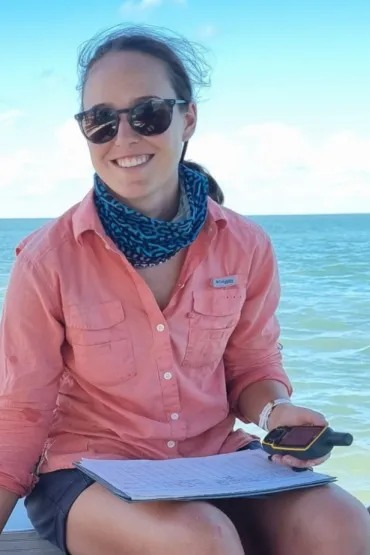
Habitat Use and Genetics of Foraging Green Turtles (Chelonia mydas) in the Top End, presented by Natalie Robson
Green turtles (Chelonia mydas) are listed as “vulnerable” and “migratory” under the Commonwealth’s Environment Protection and Biodiversity Conservation (EPBC) Act 1999 and “Endangered” by the International Union for Conservation of Nature's Red List of Threatened Species.
However, their population status in the NT is currently unknown. Green turtles are an important food resource for Indigenous Australians and a species of cultural importance across many areas of the Top End. Marine turtles in the NT are at risk from marine debris, climate change, chemical and terrestrial discharge, international take (turtles taken outside Australian waters), and Indigenous take.
Natalie Robson's PhD aims to sample green turtles resident to foraging areas in the Top End, to identify their natal origins, migratory corridors and their breeding and foraging areas in order to inform on-ground management plans.
This presentation is an overview of Natalie's PhD aims, methods, and a brief summary of the results collected so far.
Related Events

The Dr Bilawara Lee OAM (Aunty B), Faculty of Health Public Lecture
Bernard Salt explores how the aging baby boomer generation and a post-pandemic shift toward wellness will drive unprecedented demand and consumer expectations within Australia’s healthcare sector and "care economy" through 2036.
Read more about The Dr Bilawara Lee OAM (Aunty B), Faculty of Health Public Lecture
Freedom of Political Communication and Social Cohesion
The 15th Austin Asche Oration features The Hon. Justice Marcus Solomon SC, who will examine how debates surrounding free speech, rising prejudice, and declining social cohesion are reshaping Australia's legal and political landscapes.
Read more about Freedom of Political Communication and Social Cohesion
NT Art Awards Guided Tour
The Midpul Art Gallery is hosting a guided tour of the NT Art Awards that invites viewers to explore the creative processes and material choices of 72 diverse artists to gain a deeper perspective on their work.
Read more about NT Art Awards Guided Tour


