RIEL seminar series
The vibrios: barometers of climate change – bacteria that love heat waves and monsoons
| Presenter | Dr Anna Padovan and Prof Karen Gibb | |
|---|---|---|
| Date/Time |
to
|
|
| Contact person | E: riel.outreach@cdu.edu.au | |
| Location | CDU Casuarina Campus Blue 2A.1.01 and online | |
| Open to | Public | |
Vibrios are bacteria that occur naturally in warm estuarine waters. They include species or strains containing virulence factors that are pathogenic to humans, causing tissue infections through contact with water, and causing seafood related gastro. Vibrio infections are increasing globally, with Vibrios now considered barometers of climate change and are linked to recent seafood illness, especially V. parahaemolyticus (Vp). Rising sea surface temperatures in temperate regions have been linked to outbreaks of pathogenic Vibrio species, but what is the situation in Australia’s tropical north with warm seawater temperatures that support a diverse Vibrio community in seawater? This is of particular relevance for northern Australia where there is a developing tropical rock oyster (TRO) industry and where climate change models for the monsoonal north are less predictable than for temperate areas. We have found that seawater as well as TROs contain a diverse Vibrio community dominated by several species, including Vp, but have only rarely detected virulence factors. This points to a TRO-Vibrio co-existence, and responses in anomalous or stress situations may be different to that encountered in temperate oyster species. We make the case that the tropical north will likely have different virulence determinants compared to temperate regions, and efforts to identify the environmental determinants of Vibrio virulence will be key to predicting and managing Vibrio-related shellfish quality assurance in oyster aquaculture.
So where to next?
One approach to be ready for this challenge is to better understand what conditions lead to increases in virulent strains. We propose to obtain isolates of Vp from seafood, environmental and clinical samples and identify common virulence regions/domains – this will require collaboration with private and public clinical pathology laboratories. We would use these virulence domains to underpin a developing surveillance program for pathogenic Vp in oysters and to identify high risk environmental early warning conditions that coincide with harvest. This represents an opportunity for different sectors of the seafood and public health industries to engage and develop whole-of-system thinking to solve an increasingly unpredictable food safety issue. We need to work together, participate in the narrative and develop novel tools to identify high risk periods, to support food safety in the emerging northern TRO industry in an increasingly unpredictable and changing climate.
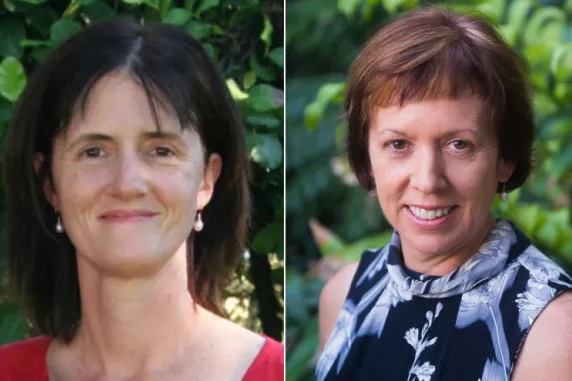
Anna has worked in molecular microbiology for 30 years, with the last 10 years in the area of environmental microbiology. She has applied high throughput sequencing to study the microbiome of biota in Darwin Harbour including the marine snails Telescopium telescopium, Nerita balteata, and Terebralia palustris, as well as the local oyster, Saccostrea cucullata, in relation to anthropogenic inputs. This work continued into enumeration of faecal indicators and prevalence of pathogens in local shellfish, targeting salmonella and vibrios, namely V. parahaemolyticus and V. vulnificus and including virulent (tdh, trh). Anna is currently a co-investigator in an FRDC project 2020-043: Toxigenic vibrio baselines and optimum storage, transport and shelf-life conditions to inform cold supply chains in the north Australian Tropical Rock Oyster industry.
Karen is an environmental microbiologist with expertise in aquatic and marine systems and the impact of environmental change and industrial pollution on water quality and marine harvest, especially oysters. She is also interested in developing ways to monitor the health of marine systems using multiple values and indicators and led a team that in 2021 produced the first Darwin Harbour Integrated Report Card. She leads the environmental microbiology research group and the Environmental Chemistry and Microbiology Unit (ECMU), specialising in metal, stable isotope, microbiological and molecular analyses in aquatic and terrestrial environments, including analyses of sediment, water and biota. A particular focus is Vibrio ecology and food safety in both artisanal marine harvest and the emerging Tropical Rock Oyster (TRO) industry.
Related Events
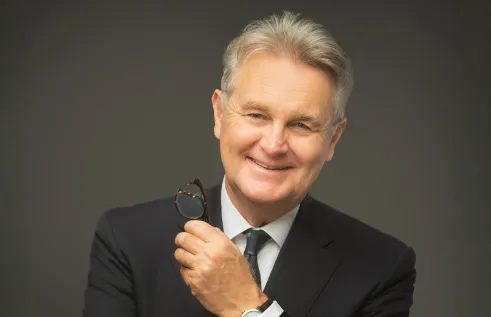
The Dr Bilawara Lee OAM (Aunty B), Faculty of Health Public Lecture
Bernard Salt explores how the aging baby boomer generation and a post-pandemic shift toward wellness will drive unprecedented demand and consumer expectations within Australia’s healthcare sector and "care economy" through 2036.
Read more about The Dr Bilawara Lee OAM (Aunty B), Faculty of Health Public Lecture
Freedom of Political Communication and Social Cohesion
The 15th Austin Asche Oration features The Hon. Justice Marcus Solomon SC, who will examine how debates surrounding free speech, rising prejudice, and declining social cohesion are reshaping Australia's legal and political landscapes.
Read more about Freedom of Political Communication and Social Cohesion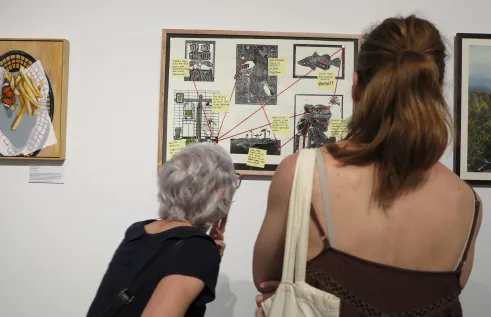
Artist Talk - Maurice O'Riordan
The 2026 NT Art Awards showcases 70 diverse Northern Territory artists and features an accompanying talk where the creators offer insights into their artistic processes, materials, and styles.
Read more about Artist Talk - Maurice O'Riordan


