RIEL seminar series
The role of remote sensing in the nature repair market
| Presenter | Dr Richard Crabbe | |
|---|---|---|
| Date/Time |
to
|
|
| Contact person |
Research Institute for the Environment and Livelihoods
|
|
| Location |
Yellow 1, Level 2, Room 48 at CDU Casuarina Campus, and online via Zoom (see below for Zoom link). All times are ACST. |
|
| Open to | All International audience, CDU staff and students, Public | |
Dr Richard Crabbe is an Earth observation scientist and a Lecturer in Remote Sensing at Charles Darwin University.
The Nature Repair Market (NRM) encourages land management practices that improve biodiversity, and is creating opportunities for First Nations peoples and organisations. However, the emerging NRM requires effective and efficient methods to foster easy participation.
The seminar ‘The role of remote sensing in the Nature Repair Market’ will demonstrate the potential of uncrewed aerial vehicles (drones) and satellites for the management of Indigenous Protected Areas in the Kimberley region of Western Australia, measuring native vegetation conditions in the savanna and desert Countries.
Richard’s research is focused on vegetation remote sensing, especially leveraging Earth observation satellites for terrestrial vegetation monitoring at landscape scales. Richard leads CDU’s Innovative Biodiversity Monitoring project in the Kimberley, and the Earth Observation and Remote Sensing lab at CDU’s Research Institute for the Environment and Livelihoods.
YouTube video
Related Events
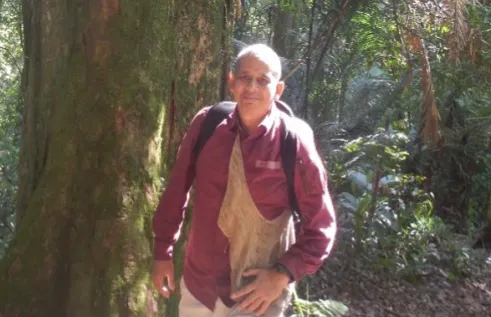
Last refugium of a critically endangered species: Three decades of conservation
The Banggai Crow (Corvus unicolor), is one of the world’s most threatened endemic species. The bird survives in an increasingly fragmented refugium within the Banggai Archipelago, Central Sulawesi.
Read more about Last refugium of a critically endangered species: Three decades of conservation
Time for research
This workshop shows you how to guarantee you spend high quality time on your research outputs. It covers prioritising, goal setting and managing competing demands in a university context. If you want to increase your research output without compromising your work/life balance, then this workshop is for you.
Read more about Time for research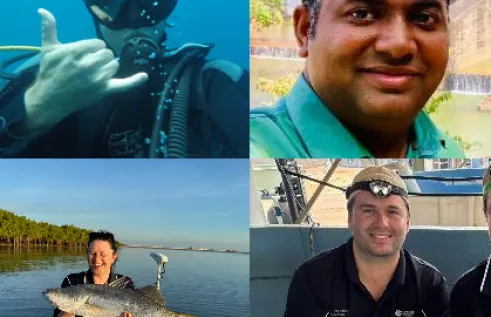
Marine science in the NT: From research and monitoring to stock assessment
In this seminar, the team will provide an overview of fisheries research in the Northern Territory, highlighting monitoring programs, data collection, and how these activities inform stock assessment and fisheries management
Read more about Marine science in the NT: From research and monitoring to stock assessment


