RIEL News
50 Years of Darwin Wildlife: A New Research-Led Approach
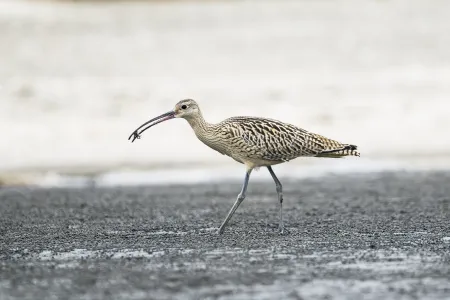
Volunteers have shouldered the burden of shorebird conservation in the Top End for more than half a century, but new research from Charles Darwin University (CDU) suggests it’s time for the government to take responsibility for all of the Northern Territory’s residents – including those with wings.
The Federal Environment Protection Biodiversity Conservation Act 1999 protects 14 shorebird species in protected by the federal Environment Protection Biodiversity Conservation Act 1999 – two of which are considered critically endangered, four are endangered, and eight are vulnerable.
Habitat degradation is the leading cause of population decline among these species, with 65 per cent of the tidal flats favoured by shorebirds lost over the last 50 years due to rapid changes in land use.
But study lead author Dr Amanda Lilleyman, a CDU Adjunct Professor, said 69 per cent of the activities and actions taken in relation to shorebird conservation in Darwin since 1972 have been community-led or research-based.
Much of these activities included volunteer monitoring programs as well as community-led education and engagement events funded through small grants.
Dr Lilleyman said her research indicated the high volume of volunteer-led activity meant there were expectations for volunteers to continue leading efforts to protect shorebird populations, as opposed to appropriate stakeholders.
She held concerns this could lead to volunteer burnout among the birds’ greatest champions.
“Australia has signed international agreements to protect shorebirds and their habitats, but the onus has historically been on volunteers to lead the charge through things like citizen science and community events,” she said.
“Even though volunteers work hard to raise awareness of the plights of shorebirds, the reality is that we will continue to see declining populations if something does not change.”
Dr Lilleyman, who is also a committee member for the voluntary BirdLife Top End committee, co-authored the Darwin Harbour Migratory Shorebird Site Action Plan to complement her research alongside fellow committee member Gavin O’Brien.
She said the plan was a blueprint for shorebird management in Darwin Harbour.
This research contributes to Goals 15 and 16 of the United Nations Sustainable Development Goals, which relate to life on land and peace, justice, and strong institutions.
This article originally appeared in CDU Uni News May 2025
Related Articles

Project examines fisheries and aquaculture work through gender lens
Nilanjana Biswas’s PhD project explores the under-researched role of women in the NT’s commercial seafood sector. Using a gender lens and mixed methods, it examines historical contributions, structural barriers, and policy impacts, making it one of Australia’s first studies in this field.
Read more about Project examines fisheries and aquaculture work through gender lens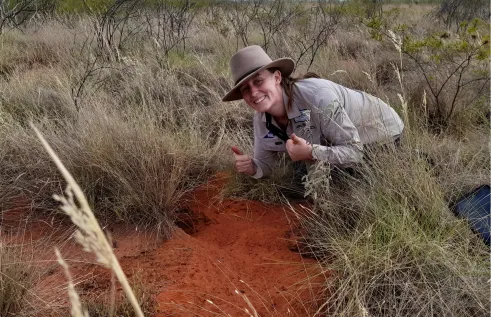
Producing practical recommendations for bilby conservation
Over a multi-year journey, Hayley Geyle completed a valuable PhD project focused on the ecology of the greater bilby. The work centred on improving understanding of the ecology, distribution, and abundance of the bilby in arid and semi-arid Australia, particularly in the NT which is one of the species’ last remaining strongholds.
Read more about Producing practical recommendations for bilby conservation
Preserving genetic diversity of endangered rabbit-rats
Bryn Pickering focused closely on brush-tailed rabbit-rats (Conilurus penicillatus) during his honours year. In particular, he aimed to evaluate the viability of a population of rabbit-rats that were translocated from mainland Cobourg Peninsula onto Greenhill Island, within Garig Gunak Barlu National Park in the NT.
Read more about Preserving genetic diversity of endangered rabbit-rats


