RIEL News
Big, cheeky yams a focus of knowledge exchange
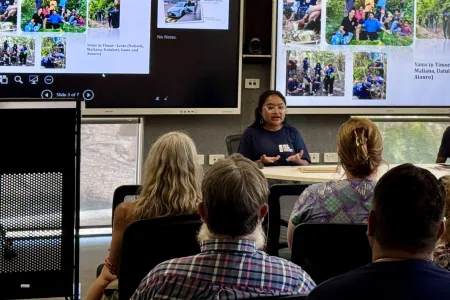
The Wild Foods Project is a collaboration between RIEL’s Aboriginal Research Practitioners Network (ARPNet) in northern Australia and the Agora Food Studio in Timor-Leste.
Funded by ACIAR and led by CDU, the project runs from 2023 to early 2025 and aims to support knowledge sharing and capacity building on wild foods between northern Australia and Timor-Leste. The two countries share many complexities and overlapping challenges relating to the commercialisation of wild foods – a subject that requires careful balance between economic development and environmental conservation.
The project recognises that platforms for transferring Indigenous knowledge need to be created and managed by communities on their own terms. In May 2024, in collaboration with the University of New South Wales, the team organised two Indigenous cultural and intellectual property workshops hosted by ARPNet founder and RIEL Adjunct Assoc Prof Bevlyne Sithole, together with ethnobotanist Dr Lorraine Williams.
From June to July the team undertook field work and interviews in several communities across the Top End of the NT and in six municipalities in Timor-Leste. Three species were a particular focus of the work – Dioscorea transversa, the ‘long yam’; Dioscorea bulbifera, the ‘cheeky yam’; and Amorphophallus sp. or the ‘big cheeky yam’. Timor-Leste communities also use the term yam to include other root plants.
Towards the end of the project, in October 2024, the team hosted public events in Darwin and Dili. This included the ‘Wild foods are us’ event held at CDU’s Casuarina campus, which focused on sharing and yarning about yams, and the Wild Food Fair hosted by Agora Food Studio in Dili.
It is hoped that by facilitating genuine knowledge sharing on the value of wild foods, the project will help to address challenges and to foster more resilient food systems based on the immense knowledge held by these communities.
This story was originally published in RIEL Annual Report 2024
Related Articles
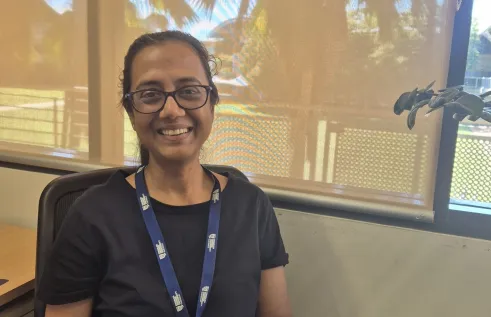
Project examines fisheries and aquaculture work through gender lens
Nilanjana Biswas’s PhD project explores the under-researched role of women in the NT’s commercial seafood sector. Using a gender lens and mixed methods, it examines historical contributions, structural barriers, and policy impacts, making it one of Australia’s first studies in this field.
Read more about Project examines fisheries and aquaculture work through gender lens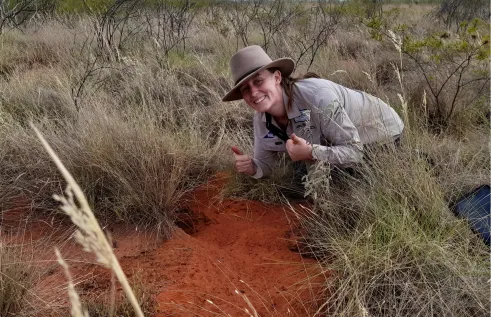
Producing practical recommendations for bilby conservation
Over a multi-year journey, Hayley Geyle completed a valuable PhD project focused on the ecology of the greater bilby. The work centred on improving understanding of the ecology, distribution, and abundance of the bilby in arid and semi-arid Australia, particularly in the NT which is one of the species’ last remaining strongholds.
Read more about Producing practical recommendations for bilby conservation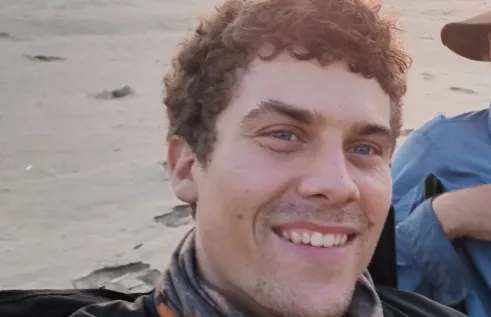
Preserving genetic diversity of endangered rabbit-rats
Bryn Pickering focused closely on brush-tailed rabbit-rats (Conilurus penicillatus) during his honours year. In particular, he aimed to evaluate the viability of a population of rabbit-rats that were translocated from mainland Cobourg Peninsula onto Greenhill Island, within Garig Gunak Barlu National Park in the NT.
Read more about Preserving genetic diversity of endangered rabbit-rats


