RIEL News
CDU researcher in the Science Show's Top 100 Australian Scientists
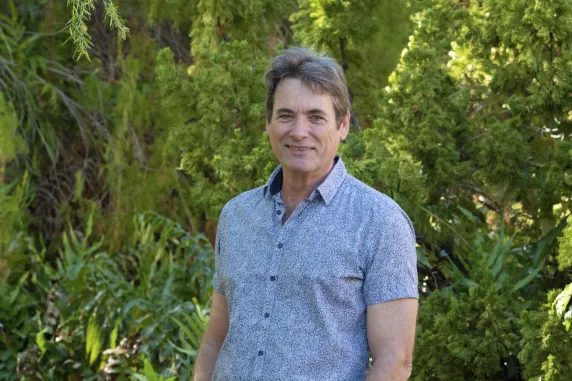
Charles Darwin University (CDU) ecologist Professor Alan Andersen has landed on the prestigious Top 100 Australian Scientists list.
The list, which aims to stimulate discussion and raise awareness of science topics, is curated by ABC’s the Science Show, a show that gives Australians a unique insight into the latest scientific research and debate.
Professor Andersen, from CDU’s Research Institute for the Environment and Livelihoods is an internationally recognised ant ecologist who has pioneered research in gaining a predictive understanding of responses of ant communities to environmental stress and disturbance.
He also has broad research interests in the ecology of tropical savannas, and the ecology and management of fire.
Professor Andersen said being included in the list is extremely flattering.
“This came out of the blue but being included is a nice recognition of my research. However I am sure there are many more-eminent Australian scientists that could have been included.”
Most recently, Professor Andersen has been documenting the incredible extent of the undescribed ant diversity in Australia, especially here in the monsoon tropics where more than 95 per cent of species have not been named.
“As far as is known, monsoonal Australia has the world’s richest ant fauna, much higher than in the Amazon, which has traditionally been considered the global hotspot for ant diversity,” he said.
“My research is based on a collection of over 8,000 species of Australian ants that I have developed over four decades, along with the DNA bar-coding of thousands of specimens.”
“Such work will continue to be a focus for the rest of my career, but I will also continue to have a major focus on fire and savanna biodiversity.”
Professor Andersen has authored five books and 250 scientific publications and is the Chair of the Australian Academy of Science’s National Committee for Ecology, Evolution and Conservation.
He is also inaugural Chair of the Territory Science Forum, whose mission to promote an effective enabling environment for science-based innovation in the NT.
He was also nominated for NT Australian of the Year for improving the understanding of the Territory’s biodiversity assets.
Other names on the list include, palaeontologist, mammal biologist and passionate environmentalist Tim Flannery, astrophysicist Matthew Bailes who helped discover fast radio bursts and Ian Frazer who co-invented the technology behind the HPV vaccine which prevents cervical and other cancers.
More on the Top 100 Australian Scientists can be found on the ABC Science Show web site.
This story was originally published in CDU Uni News February 2024 edition
Related Articles

Project examines fisheries and aquaculture work through gender lens
Nilanjana Biswas’s PhD project explores the under-researched role of women in the NT’s commercial seafood sector. Using a gender lens and mixed methods, it examines historical contributions, structural barriers, and policy impacts, making it one of Australia’s first studies in this field.
Read more about Project examines fisheries and aquaculture work through gender lens
Producing practical recommendations for bilby conservation
Over a multi-year journey, Hayley Geyle completed a valuable PhD project focused on the ecology of the greater bilby. The work centred on improving understanding of the ecology, distribution, and abundance of the bilby in arid and semi-arid Australia, particularly in the NT which is one of the species’ last remaining strongholds.
Read more about Producing practical recommendations for bilby conservation
Preserving genetic diversity of endangered rabbit-rats
Bryn Pickering focused closely on brush-tailed rabbit-rats (Conilurus penicillatus) during his honours year. In particular, he aimed to evaluate the viability of a population of rabbit-rats that were translocated from mainland Cobourg Peninsula onto Greenhill Island, within Garig Gunak Barlu National Park in the NT.
Read more about Preserving genetic diversity of endangered rabbit-rats


