RIEL News
Detecting parasitic worms to safeguard crops in northern Australia
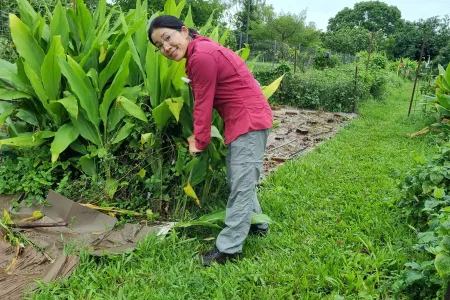
Northern Australia is home to key agricultural growing regions, including in Darwin, Katherine, Kununurra, Carnarvon, and Cairns. However, it is also recognised as a high-risk zone for plant pests due to its vastness, remoteness and high vulnerability to exotic incursions.
Plant-parasitic nematodes are tiny worms that feed on plant parts. They are one of the pests that are a major challenge in the production of grains, cotton, or horticultural crops.
The ‘Understanding current and future impacts of plant-parasitic nematodes in northern Australia’ project focuses on assessing the presence, distribution, and abundance of plant-parasitic nematodes in four key northern Australian crop-growing districts and enhancing plant-parasitic nematode diagnostic capacity. The project, which is led by Prof Maxine Piggott, Prof Chengyuan (Stephen) Xu and Dr Yujuan (Jady) Li of RINA, runs from 2023–2025.
“The impact of plant-parasitic nematodes on crops is often underestimated due to the below-ground nature of their damage and the complexity of accurate diagnosis,” said Dr Li. “However, it is crucial to improve awareness and diagnostic capacity, because early detection and management of these pests are key to safeguarding crop productivity and supporting the long-term sustainability of agriculture in northern Australia.”
Throughout 2024, the team collected soil and root samples across 72 sites, including farms, community gardens, and bushland. They were able to identify 16 kinds of plant-parasitic nematode, including two that were newly recorded in northern Australia. The project also delivered training sessions, stakeholder presentations, factsheets and a regional nematode distribution map, which helped to engage stakeholders in the importance of nematode management and surveillance.
The next phase of the project will build on this foundational work. It will provide current data on plant-parasitic nematode presence and distribution in northern Australia, which will be presented in GIS-based nematode distribution maps for northern Australia to enable accessibility. Training and capacity building in diagnostics and surveillance will also be a key part of enhancing northern Australian biosecurity. The team will develop an industry-focused booklet to translate scientific findings into practical and accessible information.
This research is funded by the Northern Australia Biosecurity Strategy (NABS), Biosecurity Plant and Science Services Division, Department of Agriculture, Fisheries and Forestry, Australian Government.
This story was originally published in the RIEL Annual Report 2024
Related Articles

Project examines fisheries and aquaculture work through gender lens
Nilanjana Biswas’s PhD project explores the under-researched role of women in the NT’s commercial seafood sector. Using a gender lens and mixed methods, it examines historical contributions, structural barriers, and policy impacts, making it one of Australia’s first studies in this field.
Read more about Project examines fisheries and aquaculture work through gender lens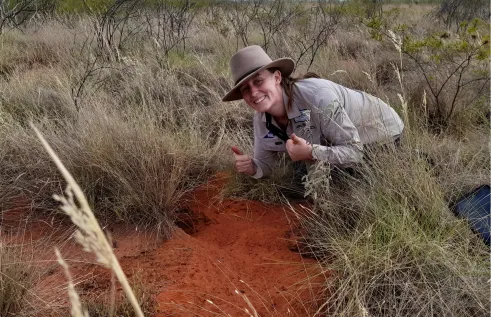
Producing practical recommendations for bilby conservation
Over a multi-year journey, Hayley Geyle completed a valuable PhD project focused on the ecology of the greater bilby. The work centred on improving understanding of the ecology, distribution, and abundance of the bilby in arid and semi-arid Australia, particularly in the NT which is one of the species’ last remaining strongholds.
Read more about Producing practical recommendations for bilby conservation
Preserving genetic diversity of endangered rabbit-rats
Bryn Pickering focused closely on brush-tailed rabbit-rats (Conilurus penicillatus) during his honours year. In particular, he aimed to evaluate the viability of a population of rabbit-rats that were translocated from mainland Cobourg Peninsula onto Greenhill Island, within Garig Gunak Barlu National Park in the NT.
Read more about Preserving genetic diversity of endangered rabbit-rats


