RIEL News
Field intensive proves fruitful for environmental students
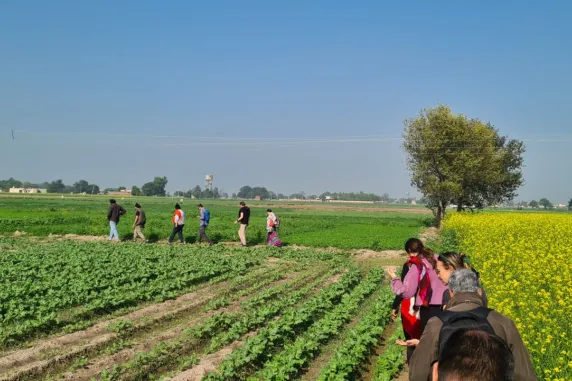
In late 2023, a group of Charles Darwin University (CDU) students spent two weeks in the state of Punjab, India on a field intensive to learn about the diverse, climate-adaptive and organic farming systems across Punjab.
During the productive visit, students visited around 10 farms and gained knowledge about sustainable agro-ecosystems while interacting with farming families, students and experts from Punjab Agricultural University in Ludhiana and Panjab University in Chandigarh.
In completing the intensive, students from CDU's Bachelor of Environmental Science and Master of Environmental Management not only achieved credit points toward their studies, but also strengthened their cross-cultural communication skills and enjoyed a unique perspective of farming systems in practice.
CDU Associate Professor in Ecological Economics Kamaljit Sangha led the enthusiastic group on the tour and said the intensive was important in broadening students' perspective.
"In addition to learning about farming systems and traditional approaches to agriculture, students learnt about how community and agricultural perspectives are interwoven in a developing country like India," Associate Professor Sangha said.
"They also had the opportunity to present their findings at a mini conference organised at Panjab University towards the end of the trip."
Associate Professor Sangha is an Outstanding Future Researcher at CDU's Research Institute for the Environment and Livelihoods (RIEL), where much of her work focuses on the transdisciplinary area of ecological economics and intersecting ecological, economic, and social sciences.
The trip was funded under the New Colombo Plan program by the Australian Government. It is anticipated that this intensive unit will run on two more occasions in future.
This story was originally published in CDU Uni News February 2024 edition
Related Articles
Project examines fisheries and aquaculture work through gender lens
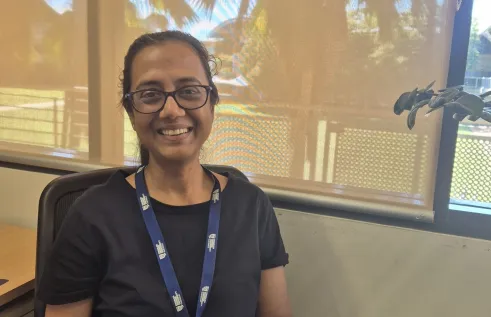
Nilanjana Biswas’s PhD project explores the under-researched role of women in the NT’s commercial seafood sector. Using a gender lens and mixed methods, it examines historical contributions, structural barriers, and policy impacts, making it one of Australia’s first studies in this field.
Read more about Project examines fisheries and aquaculture work through gender lens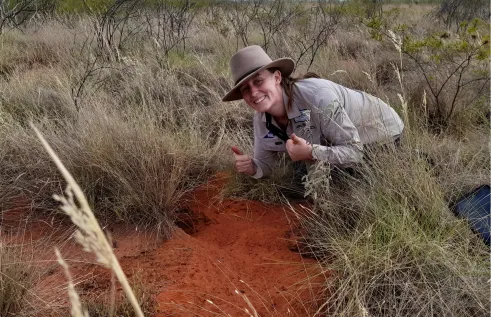
Producing practical recommendations for bilby conservation
Over a multi-year journey, Hayley Geyle completed a valuable PhD project focused on the ecology of the greater bilby. The work centred on improving understanding of the ecology, distribution, and abundance of the bilby in arid and semi-arid Australia, particularly in the NT which is one of the species’ last remaining strongholds.
Read more about Producing practical recommendations for bilby conservation
Preserving genetic diversity of endangered rabbit-rats
Bryn Pickering focused closely on brush-tailed rabbit-rats (Conilurus penicillatus) during his honours year. In particular, he aimed to evaluate the viability of a population of rabbit-rats that were translocated from mainland Cobourg Peninsula onto Greenhill Island, within Garig Gunak Barlu National Park in the NT.
Read more about Preserving genetic diversity of endangered rabbit-rats


