RIEL News
First Nations Rangers and experts visit indigenous/Adivasi communities in India to share knowledge
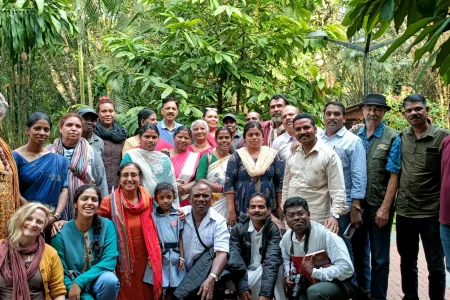
Among the Indigenous communities across the globe, one common aspect is people’s deep connections to their lands.
Under a DFAT / Centre for Australia India Relations funded project, a team of 10 Indigenous experts and rangers from across northern Australia visited India for a cultural knowledge exchange across two weeks in January 2025.
The group was led by Assoc Prof Kamaljit K Sangha, from the Research Institute for the Environment and Livelihoods. The team visited several Indigenous/Adivasi communities living deep in the Tiger Reserves in India.
Sharing knowledge of people’s connection with their lands was the basis of this cultural exchange, where communities learned about creating sustainable enterprises while also being responsible custodians of the land and protecting their cultural heritage.
The Australian team witnessed how the Adivasi communities were empowered through the creation of local enterprises, Non-Timber Forest Products (NTFPs), local Adivasi-led tourism, holding cultural/dance activities, leading forest walks, bird watching and even running a resort in collaboration with the Forest Department.
Charles Darwin University (CDU) ecological economist Dr Kamaljit Sangha, who led the project, said this trip has been beneficial for both communities in India and Australia, especially to experience other side and how people are addressing with their issues while creating opportunities.
As one participant said, "I was 100% blown away by the trip…" and others said that "it’s not just cultural but also sustainable business knowledge exchange among many other things". The trip was an eye opener for exploring and realising ecosystem-based economic opportunities.
"The learnings from this cultural exchange are invaluable to share knowledge, culture, and stories of the land to which people belong. It’s been inspiring for our Indigenous group to see creativity and how Indigenous groups lead the eco-business initiatives" Dr Sangha said.
"Both communities benefitted immensely from this exploration of sharing knowledge".
"The Australian team was amazed and fascinated by the work happening in Adivasi communities that is supporting and empowering them in establishing local NTFP enterprises such as woodcraft from a weed, Lantana camara."
Dr Sangha said there were also examples of the indigenous groups leading tourism operations - such as bamboo rafting, forest walks and night tiger trails - through their traditional lands.
This story was originally published in CDU uni news February 2025 edition
Related Articles
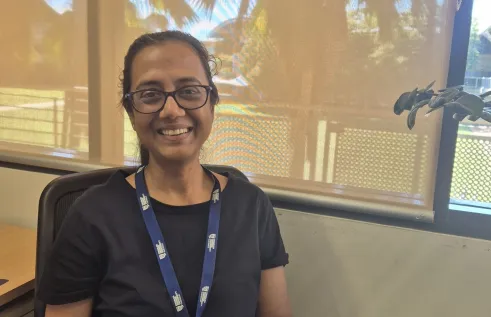
Project examines fisheries and aquaculture work through gender lens
Nilanjana Biswas’s PhD project explores the under-researched role of women in the NT’s commercial seafood sector. Using a gender lens and mixed methods, it examines historical contributions, structural barriers, and policy impacts, making it one of Australia’s first studies in this field.
Read more about Project examines fisheries and aquaculture work through gender lens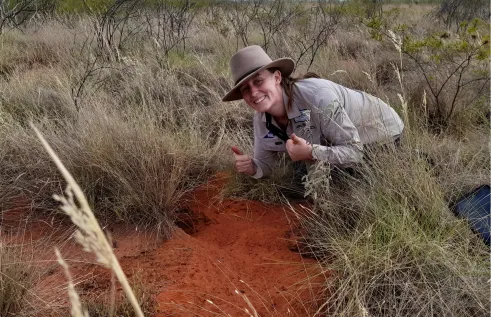
Producing practical recommendations for bilby conservation
Over a multi-year journey, Hayley Geyle completed a valuable PhD project focused on the ecology of the greater bilby. The work centred on improving understanding of the ecology, distribution, and abundance of the bilby in arid and semi-arid Australia, particularly in the NT which is one of the species’ last remaining strongholds.
Read more about Producing practical recommendations for bilby conservation
Preserving genetic diversity of endangered rabbit-rats
Bryn Pickering focused closely on brush-tailed rabbit-rats (Conilurus penicillatus) during his honours year. In particular, he aimed to evaluate the viability of a population of rabbit-rats that were translocated from mainland Cobourg Peninsula onto Greenhill Island, within Garig Gunak Barlu National Park in the NT.
Read more about Preserving genetic diversity of endangered rabbit-rats


