RIEL News
Rangers and PhD candidate unite at mapping workshop
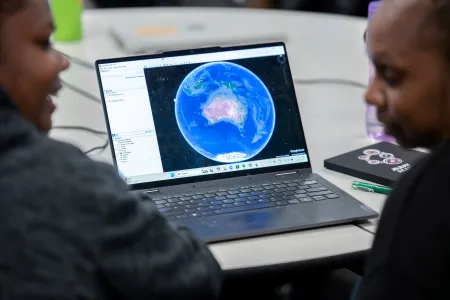
How can technology support the revival of knowledge, its intergenerational transmission, and the defense of ancestral lands, all while ensuring cultural protocols are upheld?
These were some of the many vital questions tackled within Winyama’s annual National Indigenous Mapping Workshop (IMW), held this year for the first time in Meanjin (Brisbane).
Attending the workshop were Indigenous rangers from Nyangumarta Warrarn Aboriginal Corporation Romleesha Hunter and Leesharni Thomas of Nyangumarta Warrarn Aboriginal Corporation. They were joined by project collaborator Charles Darwin University’s Research Institute for the Environment and Livelihoods PhD candidate Stephanie Lee, who is supporting the project ‘Towards Right-way Fire Management’.
The project generates data to inform culturally appropriate fire management targets across four Native Title Determinations (Ngurrara, Ngururrpa, Nyangumarta and Karajarri) in the Great Sandy Desert in the Kimberley region of Western Australia. This work includes a look back in time, drawing on historical aerial photographs, to gauge the patterns of pre-colonial burning, as well as how closely ranger burning resembles the old patterns. It also considers the extent to which ranger burning might mitigate the spread of wildfires.
The IMW 2025 was a vibrant, content-packed forum, that is tailored each year to the needs of attendees, who are from across the continent. Alongside technical skill building and awareness raising around relevant planning and policy protocols, IMW offers opportunities for networking and relationship building between First Nations communities and their allies. This exchange of ideas and perspectives is all about empowering each other to envision what is possible and having others to turn to for support.
During IMW 2025, expert workshop presenters guided participants across a suite of software options. This training included software uses and how to apply them in a broader strategic setting, including practices of Indigenous Data Sovereignty.
The ‘Towards Right-way Fire Management’ team, uncovered useful findings around how to use different software for data analysis. There were also ideas for how the team could collate data into storytelling for communities to use.
Those working on the First Nations Estate can monitor the Winyama website for information about the IMW 2026 or contact Winyama for other capacity-building opportunities at enquiries@winyama.com.au.
This article was originally published in CDU Uni News August 2025
Related Articles
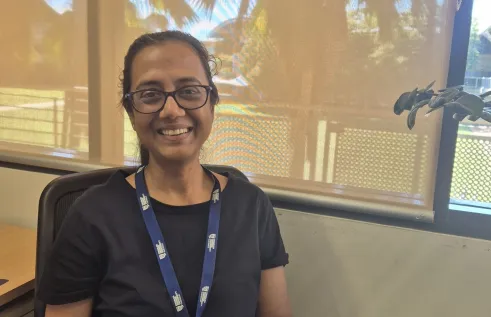
Project examines fisheries and aquaculture work through gender lens
Nilanjana Biswas’s PhD project explores the under-researched role of women in the NT’s commercial seafood sector. Using a gender lens and mixed methods, it examines historical contributions, structural barriers, and policy impacts, making it one of Australia’s first studies in this field.
Read more about Project examines fisheries and aquaculture work through gender lens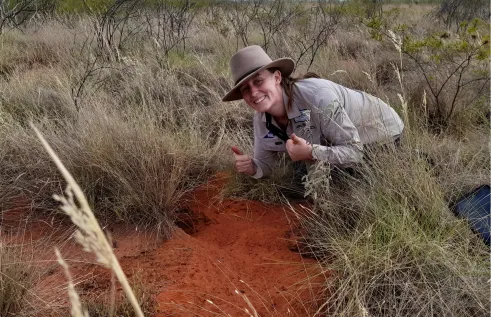
Producing practical recommendations for bilby conservation
Over a multi-year journey, Hayley Geyle completed a valuable PhD project focused on the ecology of the greater bilby. The work centred on improving understanding of the ecology, distribution, and abundance of the bilby in arid and semi-arid Australia, particularly in the NT which is one of the species’ last remaining strongholds.
Read more about Producing practical recommendations for bilby conservation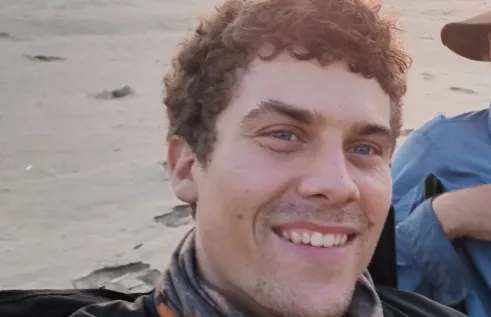
Preserving genetic diversity of endangered rabbit-rats
Bryn Pickering focused closely on brush-tailed rabbit-rats (Conilurus penicillatus) during his honours year. In particular, he aimed to evaluate the viability of a population of rabbit-rats that were translocated from mainland Cobourg Peninsula onto Greenhill Island, within Garig Gunak Barlu National Park in the NT.
Read more about Preserving genetic diversity of endangered rabbit-rats


