RIEL News
Supporting sustainable fisheries management in the Torres Strait
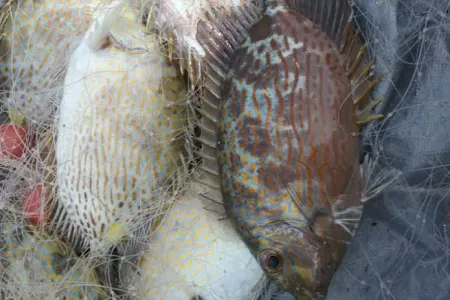
A proposed mobile application for collecting data about traditional fishing could help to ensure sustainable fisheries management in the Torres Strait region of North Queensland.
Traditional fishing in the Torres Strait region is vital to livelihoods and nutrition. The long-term sustainability of fisheries requires reliable catch data from all sectors. While commercial fisheries have management plans in place, non-commercial catches are not always counted or recorded. Torres Strait Islands residents have expressed concern around this and for the need to protect and monitor traditional fisheries to ensure sustainable resource management and food security.
The project ‘Measuring non-commercial fishing catches (traditional fishing) in the Torres Strait in order to improve fisheries management and promote sustainable livelihoods’ (FRDC Project Number 2022-045) collated and shared information about the development of a traditional fishing catch recording system to help address these data gaps. The project ran from 2022 to 2024 and was co-led by RIEL’s Prof Natasha Stacey and Torres Strait fisheries consultant and Traditional Owner Kenny Bedford, with team members Tim Skewes and David Brewer.
Through a co-design process led by Mr Bedford, representatives of 15 communities from across the Northern Peninsula Area in North Queensland and the Torres Strait Islands identified and discussed traditional fishing behaviours, priorities, and needs for a proposed app. The team also completed a review of other fishing apps, costs and options, and collated information for app design and development.
The project came up with recommendations for monitoring including principles for an app program and governance arrangements. The research highlighted the need for a future monitoring program to be implemented within an Indigenous-led governance structure working in partnership with a coalition of trusted organisations. These results are important for other national and international Indigenous fisheries monitoring programs led by First Nations peoples to support Sea Country protection, fisheries management and protection of traditional seafoods and livelihoods.
The project was supported by funding from the Fisheries Research Development Corporation and the Australian Fisheries Management Authority on behalf of the Australian Government, and would not have been possible without the support, time and knowledge of Torres Strait communities, regional stakeholders, and app developers and custodians.
This story was originally published in RIEL Annual Report 2024
Related Articles
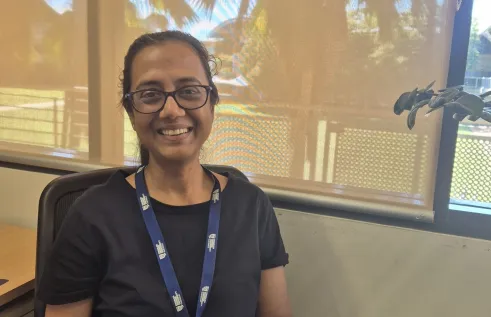
Project examines fisheries and aquaculture work through gender lens
Nilanjana Biswas’s PhD project explores the under-researched role of women in the NT’s commercial seafood sector. Using a gender lens and mixed methods, it examines historical contributions, structural barriers, and policy impacts, making it one of Australia’s first studies in this field.
Read more about Project examines fisheries and aquaculture work through gender lens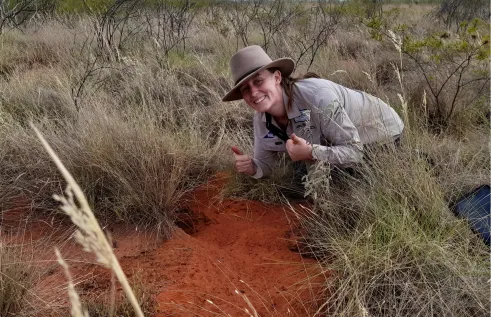
Producing practical recommendations for bilby conservation
Over a multi-year journey, Hayley Geyle completed a valuable PhD project focused on the ecology of the greater bilby. The work centred on improving understanding of the ecology, distribution, and abundance of the bilby in arid and semi-arid Australia, particularly in the NT which is one of the species’ last remaining strongholds.
Read more about Producing practical recommendations for bilby conservation
Preserving genetic diversity of endangered rabbit-rats
Bryn Pickering focused closely on brush-tailed rabbit-rats (Conilurus penicillatus) during his honours year. In particular, he aimed to evaluate the viability of a population of rabbit-rats that were translocated from mainland Cobourg Peninsula onto Greenhill Island, within Garig Gunak Barlu National Park in the NT.
Read more about Preserving genetic diversity of endangered rabbit-rats


