RIEL seminar series
The Water Towers Project in Moneragala District, Sri Lanka
| Presenter | Dr Kamy Melvani | |
|---|---|---|
| Date/Time |
to
|
|
| Contact person | E: RIEL.outreach@cdu.edu.au | |
| Location | CDU Casuarina campus Yellow 1.1.39 and online | |
| Open to | Public | |
Forest destruction in populous tropical watersheds is mainly caused by agricultural expansion, and results in land degradation, increased habitat loss, and impoverished inhabitants. Alternately, adopting tree-dominated agriculture or forest gardens (FG) could reverse forest loss, increase livelihood security, and improve watershed sustainability. The Neo Synthesis Research Centre (NSRC) has rehabilitated farmers’ landholdings in degraded Sri Lankan watersheds for over 30 years.
This seminar will describe the rehabilitation of a degraded 4.9 ha landholding in the Maragala Oya watershed using the FG approach. Preliminary discussions revealed household issues, needs and available resources. Baseline surveys investigated topography, light, wind, water flows, vegetation structure, composition, and ecological functions, including fauna. This information guided rehabilitation using numerous tools, mainly analog forestry. More than 5,000 plants in diverse species were established between 1999-2004 to: serve household needs, recreate habitat, increase shade, soil fertility and recharge groundwater.
Project successes motivated other watershed farmers towards land rehabilitation. This study has had positive implications for watershed rehabilitation in tropical countries challenged by forest loss.
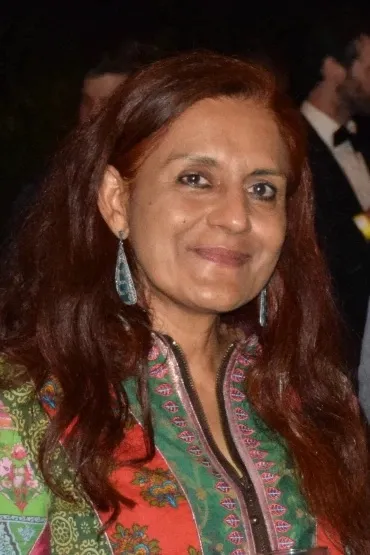
Dr Kamal (Kamy) Melvani has a multidisciplinary PhD on the social, ecological, financial and nutrition values of forest gardens in Sri Lanka, and an interdisciplinary MSc on the bioremediation of nitrates in groundwater. She is skilled in multiple restoration techniques including regenerative agriculture, conservation forestry, analog forestry, riparian forestry and bioremediation. Dr Melvani has designed and implemented 27 projects for the NSRC in Sri Lanka that restored watersheds, developed alternative livelihood initiatives for local communities, and developed multisectoral partnerships which increased ecosystem goods and services in a climate variable scenario.
She is a research adjunct at CDU, and is also engaged in the rehabilitation of degraded land for drought-adaptation, and in the biological mitigation of landslide threats in Sri Lanka.
(No video)
Related Events

The Dr Bilawara Lee OAM (Aunty B), Faculty of Health Public Lecture
Bernard Salt explores how the aging baby boomer generation and a post-pandemic shift toward wellness will drive unprecedented demand and consumer expectations within Australia’s healthcare sector and "care economy" through 2036.
Read more about The Dr Bilawara Lee OAM (Aunty B), Faculty of Health Public Lecture
Freedom of Political Communication and Social Cohesion
The 15th Austin Asche Oration features The Hon. Justice Marcus Solomon SC, who will examine how debates surrounding free speech, rising prejudice, and declining social cohesion are reshaping Australia's legal and political landscapes.
Read more about Freedom of Political Communication and Social Cohesion
NT Art Awards Guided Tour
The Midpul Art Gallery is hosting a guided tour of the NT Art Awards that invites viewers to explore the creative processes and material choices of 72 diverse artists to gain a deeper perspective on their work.
Read more about NT Art Awards Guided Tour


