RIEL News
CDU researchers take science through to global policy
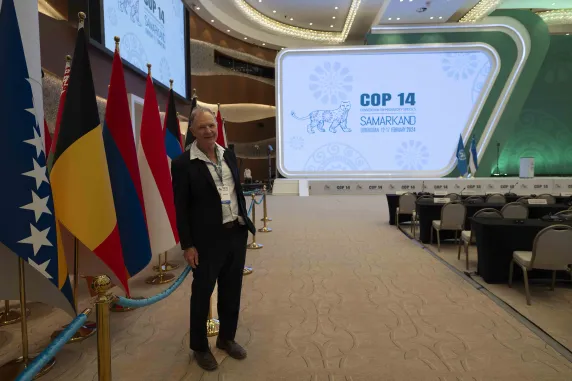
The 14th Conference of the Parties (COP) to the Convention of Migratory Species (CMS), held in February in Samarkand, Uzbekistan, provided a vital forum for environmental science to inform global policy.
COPs are central to the workings of international conventions and represent a critical opportunity to take science all the way through to policymakers.
As an environmental treaty of the United Nations, the CMS is a global platform focused on “the conservation and sustainable use of migratory animals and their habitats”.
CDU’s Professor Stephen Garnett, who has been working to put species lists in taxonomic order and to check the science behind the species that are listed for protection, attended the COP while on leave in his role as elected counsellor to the Convention’s Science Council.
Professor Garnett who is also a Professor of Conservation and Sustainable Livelihoods at CDU’s Research Institute for the Environment and Livelihoods (RIEL) stressed the importance of COPs and using science to make decisions.
“Decisions made at COPs can take decades to nut out in negotiations and have real life impacts on the ground.
“For Australia, listing under the CMS has legal implications. Any species listed is also automatically listed under our national legislation for special protection. We need to make sure the science is right.”
At the same meeting, a report written by RIEL PhD candidate David Drynan and RIEL adjunct research fellow Dr Barry Baker on how to reduce the number of sharks caught by mistake by fishing fleets around the world was tabled.
Following the tabling of that report, Mr Drynan has been invited to present his findings to a meeting of tuna fishers.
“It is a privilege to be taking science through to global policy and great to see RIEL and CDU so well represented,” Professor Garnett said.
This story was originally published in CDU Uni News April 2024 edition
Related Articles

Project examines fisheries and aquaculture work through gender lens
Nilanjana Biswas’s PhD project explores the under-researched role of women in the NT’s commercial seafood sector. Using a gender lens and mixed methods, it examines historical contributions, structural barriers, and policy impacts, making it one of Australia’s first studies in this field.
Read more about Project examines fisheries and aquaculture work through gender lens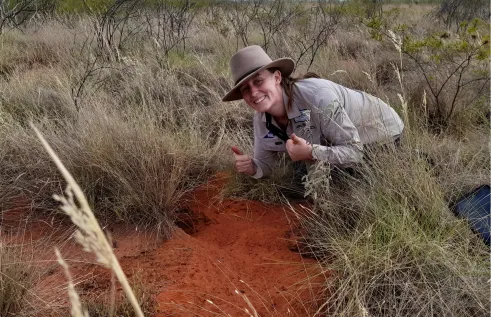
Producing practical recommendations for bilby conservation
Over a multi-year journey, Hayley Geyle completed a valuable PhD project focused on the ecology of the greater bilby. The work centred on improving understanding of the ecology, distribution, and abundance of the bilby in arid and semi-arid Australia, particularly in the NT which is one of the species’ last remaining strongholds.
Read more about Producing practical recommendations for bilby conservation
Preserving genetic diversity of endangered rabbit-rats
Bryn Pickering focused closely on brush-tailed rabbit-rats (Conilurus penicillatus) during his honours year. In particular, he aimed to evaluate the viability of a population of rabbit-rats that were translocated from mainland Cobourg Peninsula onto Greenhill Island, within Garig Gunak Barlu National Park in the NT.
Read more about Preserving genetic diversity of endangered rabbit-rats


