RIEL News
Researchers have fire in the belly for savanna burning
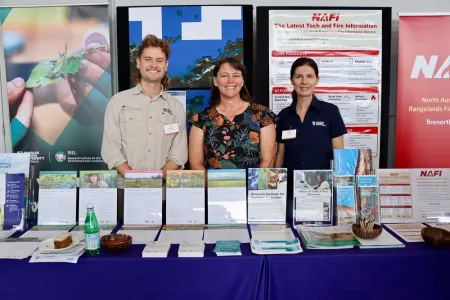
The scope of Charles Darwin University’s (CDU) research into savanna fire management and the carbon industry was on show at the recent Savanna Fire Forum.
A team of CDU representatives was present at the forum in Darwin on 24-26 February 2026, which for the first time was combined with the National Indigenous Carbon Forum.
The event brings together ranger groups, land managers, researchers, government, and more. It supports First Nations leadership in savanna fire management, fosters knowledge sharing, and promotes best practice.
The forum was first launched by CDU’s Darwin Centre for Bushfire Research (DCBR) and North Australia and Rangelands Fire Information (NAFI) service in 2019. It has become a staple of Darwin’s conference calendar and is now organised annually by the Indigenous Carbon Industry Network.
CDU, the DCBR, NAFI, and the Research Institute for the Environment and Livelihoods (RIEL) continue to support the forum and were joint sponsors of this year’s event, which had the theme “Strong roots, strong futures”.
The team took the opportunity to share information about research and study pathways across CDU, alongside a discussion zone for RIEL’s ‘How safe are island havens for biodiversity?’ project and a popular interactive display of the NAFI website.
NAFI is a critical service that provides fire information for people across northern and central Australia. During the forum, NAFI staff presented a summary of the 2025 fire season and a session on decision making in climate and fire.
NAFI Service Manager Dr Peter Jacklyn emphasised that NAFI is a vital tool for many attendees at the forum who were fire managers or planners.
“Savanna burning carbon projects are important to NAFI as they are able to achieve significant outcomes through improved fire management,” Dr Jacklyn said.
“NAFI works closely with these groups seeking feedback on future applications for NAFI data as well as valuable feedback on what works and what doesn’t within the current NAFI platform.”
During a panel on the international savanna fire management method, RIEL PhD candidate Othusitse (OT) Lekoko spoke about applying Australian-learned savanna burning methodologies within the southern African regional fire management context.
“The success of savanna burning methodologies hinges on the recognition of local socio-political agendas, land management values, and involvement of local communities, particularly integration of Western and Indigenous knowledge systems,” Mr Lekoko said.
“However, the overarching challenge is to design a market-based fire management strategy that not only empowers local communities but is also ecologically sound and supports national and global climate goals.”
Elsewhere at the conference, DCBR research director Professor Jeremy Russell-Smith facilitated a workshop on the Great Western Woodlands fire management method, while Dr Andrew Edwards and Dr Sofia Oliveira presented a session on dynamic habitat mapping.
Other CDU related presenters included Dr Rohan Fisher, Taegan Calnan, Kerry Crosbie, Professor Lindsay Hutley, Dr Cara Penton and Warddeken Rangers, Professor Sarah Legge and Karrajarri Rangers, Helen Truscott, Dr Rachel Groom and Professor Catherine Lovelock.
This story was originally published in CDU Uni News April 2026 edition
Related Articles
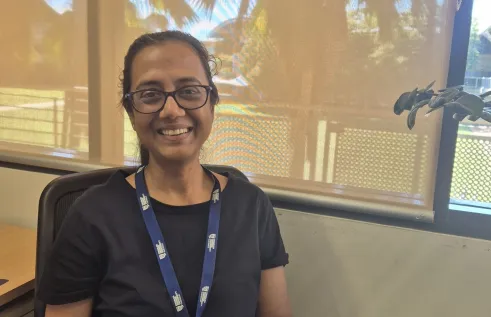
Project examines fisheries and aquaculture work through gender lens
Nilanjana Biswas’s PhD project explores the under-researched role of women in the NT’s commercial seafood sector. Using a gender lens and mixed methods, it examines historical contributions, structural barriers, and policy impacts, making it one of Australia’s first studies in this field.
Read more about Project examines fisheries and aquaculture work through gender lens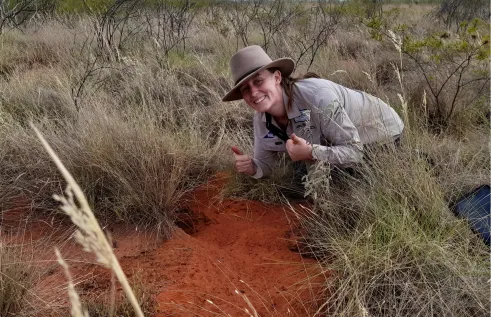
Producing practical recommendations for bilby conservation
Over a multi-year journey, Hayley Geyle completed a valuable PhD project focused on the ecology of the greater bilby. The work centred on improving understanding of the ecology, distribution, and abundance of the bilby in arid and semi-arid Australia, particularly in the NT which is one of the species’ last remaining strongholds.
Read more about Producing practical recommendations for bilby conservation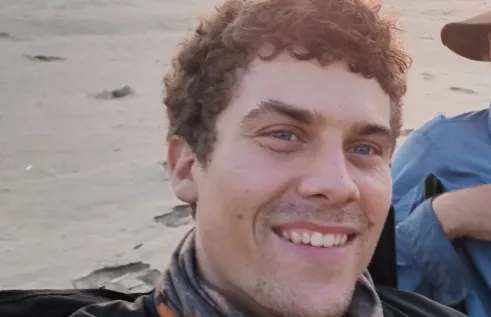
Preserving genetic diversity of endangered rabbit-rats
Bryn Pickering focused closely on brush-tailed rabbit-rats (Conilurus penicillatus) during his honours year. In particular, he aimed to evaluate the viability of a population of rabbit-rats that were translocated from mainland Cobourg Peninsula onto Greenhill Island, within Garig Gunak Barlu National Park in the NT.
Read more about Preserving genetic diversity of endangered rabbit-rats


