RIEL News
Students head to Kakadu as part of Indigenous Livelihoods intensive
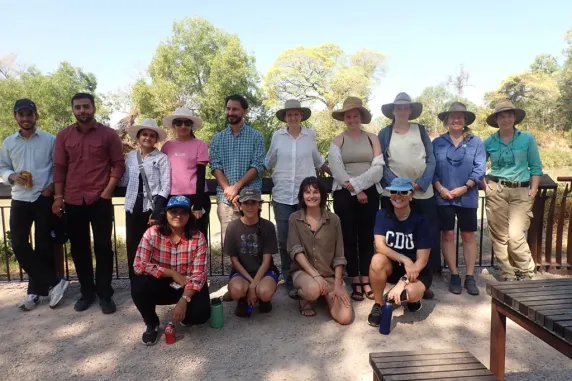
Students have participated in the Natural Resources and Indigenous Livelihoods intensive exploring the synergies between natural resource-based enterprise development and Indigenous Livelihoods.
Eleven students including those who are in the third year of their degree or doing masters coursework as well as professional government participants took part in the intensive based in Darwin.
For five days students learnt about the social, economic, cultural, policy and environmental context related to natural resource use as well as aspects of Indigenous livelihood enterprise establishment, operation, and sustainability.
Unit coordinator and Environmental Science Professor Natasha Stacey said the intensive provided students with practical experience in planning new natural-based enterprises.
"The intensive includes lectures, discussions and two day/night field trip to Kakadu to help students experience first-hand, enterprises in a variety of cultural, environmental and commercial settings," Professor Stacey said.
"Students were exposed to a range of topics and case studies which provided them with an understanding of the opportunities and challenges involved in supporting and developing livelihood initiatives, and the skills required to participate in a diverse range of conservation, commercial and cultural enterprises."
As part of the intensive, students travelled to Kakadu attending the Marrawdi gallery arts and crafts business as well as the Ranger Mine to understand about the rehabilitation of the mine.
Students also had an opportunity to learn about the native plants found in Kakadu and were able to take part in an Indigenous owned and led cultural tourism experience by Kakadu Cultural Tours Gulyambi Cultural Cruise on the East Alligator River.
"The field trip provides practical examples and showcases the many different forms of enterprises that indigenous people are engaged in including single plant-based products to land and sea management and a tourism Indigenous experience," Professor Stacey said.
"It also provides an opportunity for students to experience the wonderful nature, Indigenous culture and businesses we have on our doorstep here in the NT."
This story was originally published in CDU Uni News October 2023 edition
Related Articles
Project examines fisheries and aquaculture work through gender lens
Nilanjana Biswas’s PhD project explores the under-researched role of women in the NT’s commercial seafood sector. Using a gender lens and mixed methods, it examines historical contributions, structural barriers, and policy impacts, making it one of Australia’s first studies in this field.
Read more about Project examines fisheries and aquaculture work through gender lens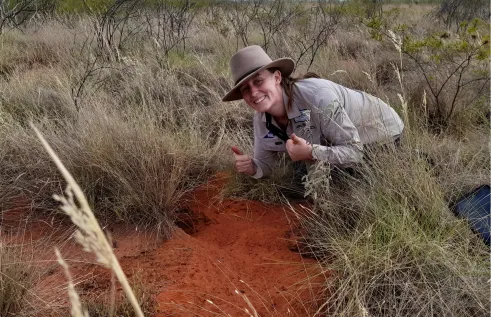
Producing practical recommendations for bilby conservation
Over a multi-year journey, Hayley Geyle completed a valuable PhD project focused on the ecology of the greater bilby. The work centred on improving understanding of the ecology, distribution, and abundance of the bilby in arid and semi-arid Australia, particularly in the NT which is one of the species’ last remaining strongholds.
Read more about Producing practical recommendations for bilby conservation
Preserving genetic diversity of endangered rabbit-rats
Bryn Pickering focused closely on brush-tailed rabbit-rats (Conilurus penicillatus) during his honours year. In particular, he aimed to evaluate the viability of a population of rabbit-rats that were translocated from mainland Cobourg Peninsula onto Greenhill Island, within Garig Gunak Barlu National Park in the NT.
Read more about Preserving genetic diversity of endangered rabbit-rats


