RIEL seminar series
The eDNA revolution: advancing biodiversity monitoring while navigating challenges
| Presenter | Professor Maxine Piggott | |
|---|---|---|
| Date/Time |
to
|
|
| Contact person | E: RIEL.outreach@cdu.edu.au | |
| Location |
Yellow 1 level 1 room 33 at CDU Casuarina Campus And online via Zoom (see below for Zoom link) All times are ACST |
|
| Open to | Public | |
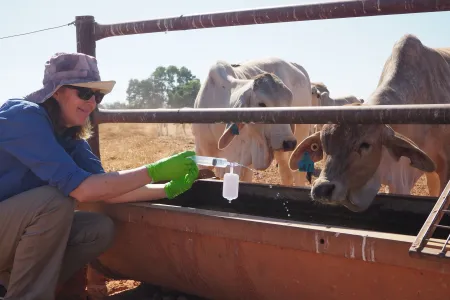
Prof Maxine Piggott is currently the Program Leader of the Research Institute for Northern Agriculture (RINA) at Charles Darwin University (CDU) and leads RINA’s tropical biosecurity research group.
Environmental DNA (eDNA) refers to DNA shed into the surrounding environment from living organisms. These organisms can be identified through their DNA sequence and eDNA has revolutionised monitoring in all environments allowing us to detect and better understand hidden diversity. However, there are challenges to overcome.
In the seminar ‘The eDNA revolution: advancing biodiversity monitoring while navigating challenges’, Maxine will give an overview of how eDNA has been used for monitoring biodiversity and invasive species, showcasing when it works well and when it doesn’t. She will demonstrate how the value of eDNA is enhanced when supported by strong sampling design, modelling approaches and quality control.
Maxine has worked in academia, government, and with the Commonwealth Scientific and Industrial Research Organisation (CSIRO). She has been involved in developing and applying eDNA methods for monitoring for over 20 years. Her other research interests include phylogenetics, population and landscape genetics.
Related Events
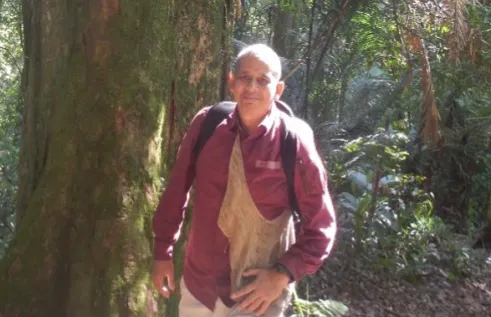
Last refugium of a critically endangered species: Three decades of conservation
The Banggai Crow (Corvus unicolor), is one of the world’s most threatened endemic species. The bird survives in an increasingly fragmented refugium within the Banggai Archipelago, Central Sulawesi.
Read more about Last refugium of a critically endangered species: Three decades of conservation
Time for research
This workshop shows you how to guarantee you spend high quality time on your research outputs. It covers prioritising, goal setting and managing competing demands in a university context. If you want to increase your research output without compromising your work/life balance, then this workshop is for you.
Read more about Time for research
What does it mean to be an academic today?
Hear from a panel of individuals from a range of backgrounds and career stages. Key topics to be covered include:
- The academic career in today’s context and the different types of academic roles
- The emergence of the impactful researcher
- From industry to academia and vice versa
- Being strategic: understanding external forces at play, including regulation and policy directions from government
- The importance of consistency and resilience


