RIEL seminar series
Monitoring Australia's Ecosystems - TERN's field program
| Presenter | A/Prof. Ben Sparrow (TERN) |
|---|---|
| Date/Time |
to
|
| Contact person | E: riel.outreach@cdu.edu.au |
| Location | CDU Casuarina campus, Yellow Building 1.1.39 or Zoom |
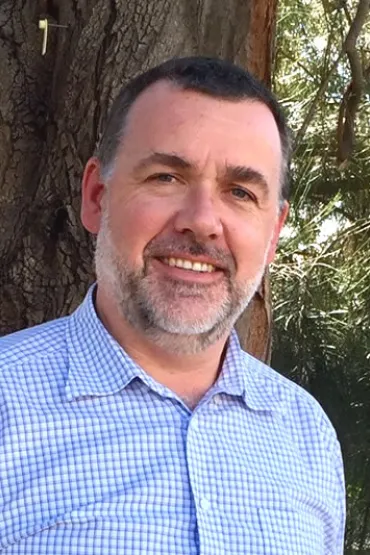
The TERN Adelaide-based team, led by Ben Sparrow, conducts field surveys and sampling across a national network of over 900 one-hectare plots, to collect soil and vegetation specimens and data. The TERN Ecosystem Surveillance field program enables consistent and ongoing monitoring to assess and address the direction and magnitude of change across Australian ecosystems, using the AusPlots survey protocol. This protocol provides a standardised method used by TERN to collect soil and vegetation information at all plots, and the accompanying app ensures seamless, curated data flow from the field to TERN’s open access Data Discovery Portal. TERN provides training and advice to advance, implement and train on nationally agreed, standard field methods to the broader ecosystem science community including scientists, government agencies, industry, land managers and students.
Ben leads TERN’s Adelaide-based field program, enabling ecosystem surveillance monitoring across Australia and open access to ecological data, and soil and vegetation samples. Ben has previously worked for both the South Australian and Northern Territory government environment agencies. His current research focuses on surveillance monitoring of Australia, and the benefits of integrating spatial information with ecology for improved management outcomes.
Related Events

Freedom of Political Communication and Social Cohesion
The 15th Austin Asche Oration features The Hon. Justice Marcus Solomon SC, who will examine how debates surrounding free speech, rising prejudice, and declining social cohesion are reshaping Australia's legal and political landscapes.
Read more about Freedom of Political Communication and Social Cohesion
Last refugium of a critically endangered species: Three decades of conservation
The Banggai Crow (Corvus unicolor), is one of the world’s most threatened endemic species. The bird survives in an increasingly fragmented refugium within the Banggai Archipelago, Central Sulawesi.
Read more about Last refugium of a critically endangered species: Three decades of conservation
Time for research
This workshop shows you how to guarantee you spend high quality time on your research outputs. It covers prioritising, goal setting and managing competing demands in a university context. If you want to increase your research output without compromising your work/life balance, then this workshop is for you.
Read more about Time for research


